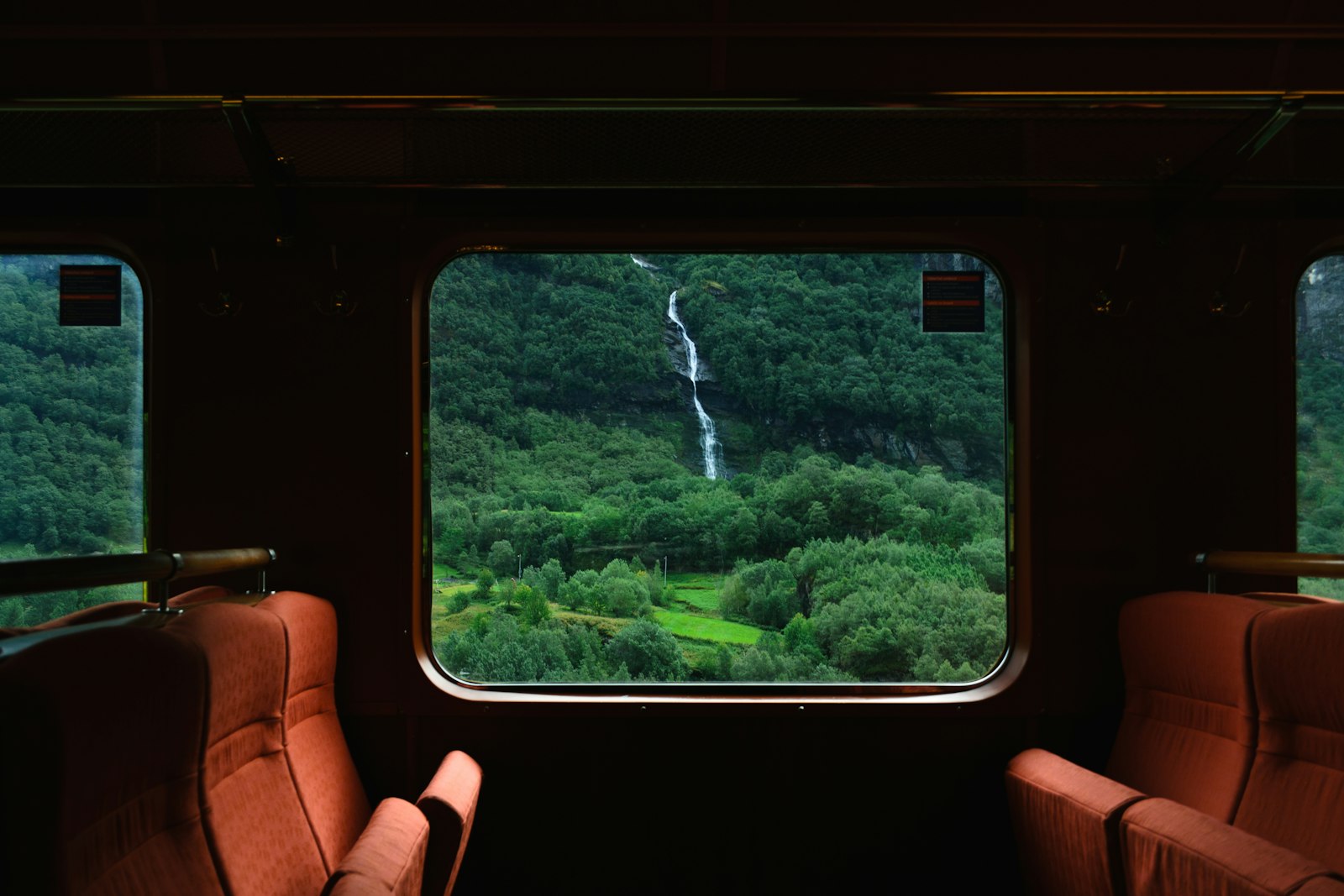
In a survey of 100,000 people in Japan, 33.0% said they travel in order to recover from fatigue. Five years ago the figure was 27.4%, so that is a rise of 5.6 points. On a late-summer express train, there are more work bags than travel bags. And yet everyone in a window seat is doing the same thing: looking outside. That stretch of time is starting to get a name.
What grew fastest were castle visits and train journeys
The survey was conducted by the Japan Recovery Association and announced on August 7, 2026. It covered 100,000 people aged 20 to 79 nationwide — 50,000 men and 50,000 women — was carried out in May 2026, and was weighted by prefecture, age group, and employment status. Travel was named as a fatigue-recovery method by 31.2% of men and 34.7% of women. Compared with 2021, that is a gain of 6.3 points for men and 4.9 points for women.
The breakdown of what people actually do while traveling is the interesting part. Hot springs came first at 36.3%, walking or jogging was close behind at 36.1%, and driving followed at 28.8%. Sorted by growth since five years ago, the leaders are castle visits at 3.82 times, train journeys at 3.71 times, and visits to so-called power spots at 3.68 times. It is not the flashy experiences that are growing, but the plain ones: walking, looking, moving.
21.1% of people in their 20s, 47.9% of those in their 70s
What caught my attention most in this release was the gap between generations. Travel is used as a recovery method by 21.1% of people in their 20s, 31.7% in their 50s, 41.5% in their 60s, and 47.9% in their 70s. The figure climbs neatly with age.
If anything, it is younger people who are tired. And yet the share who recover through travel is less than half that of the older group. Constraints of time and money are obviously part of it. But my reading is that they don't explain the whole gap. Younger people's trips are packed too tightly. What to see at what hour, where to eat, how to photograph and post it. A trip that has become a production schedule is a second job wearing the face of a holiday. The denser it gets, the more tired you are when you come home.
Travel works as recovery for older generations, I suspect, because they have learned how to bring home some empty space. Sitting in the bath, waiting for a train, watching the landscape go by. The proportion of time that produces nothing is simply higher.
Travel is strong because it serves several kinds of rest at once
The Japan Recovery Association groups rest into seven kinds — repose, movement, nutrition, connection, entertainment, making and imagining, and change of setting — and this release calls a trip that combines them "compound rest." We introduced the classification itself in our piece on the study of rest.
Fit travel into that frame and its efficiency becomes visible. A hot spring is repose, a morning walk is movement, eating local food is nutrition, talking with a companion is connection, castles and museums are entertainment and imagining, and the journey itself is a change of setting. Someone who manages only one kind on an ordinary day off will hit four or five of them in half a day away. That also explains why the fastest-growing activities were plain ones like castle visits and train travel. What works is not the intensity of the stimulus but the variety.
If that's right, the value of a trip lies not in the vague word "extraordinary" but in the fact that it lets you rearrange the whole composition of your rest at once. Which also means the same thing can be arranged close to home. The idea of recovering by moving, which we covered in our piece on active rest, belongs to this same question of composition.
Choose your next day off by how many kinds of rest fit in it
- Cut one item from the itinerary and create a half day of doing nothing. Every item you cut moves the trip further from consumption and closer to recovery.
- Even on a day trip, hit three or more kinds. Take a train (change of setting), walk (movement), eat something local (nutrition), and it already qualifies as compound.
- Use the morning of a trip for a walk. It is probably no accident that walking ranked alongside hot springs in the survey.
Long journeys and unfamiliar baths put a load on the body. On days when you are not at full strength, don't push it — cut the plan instead.