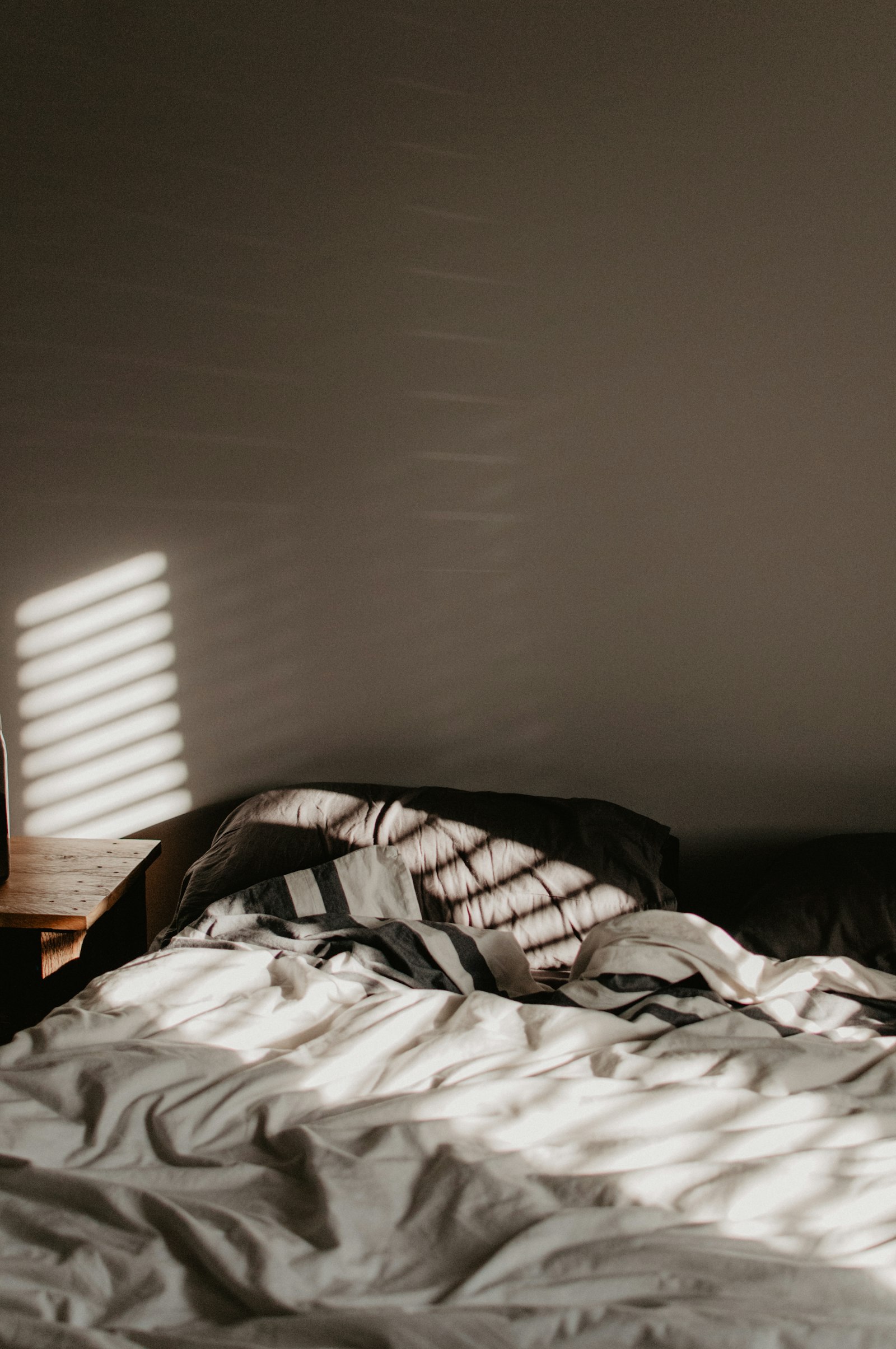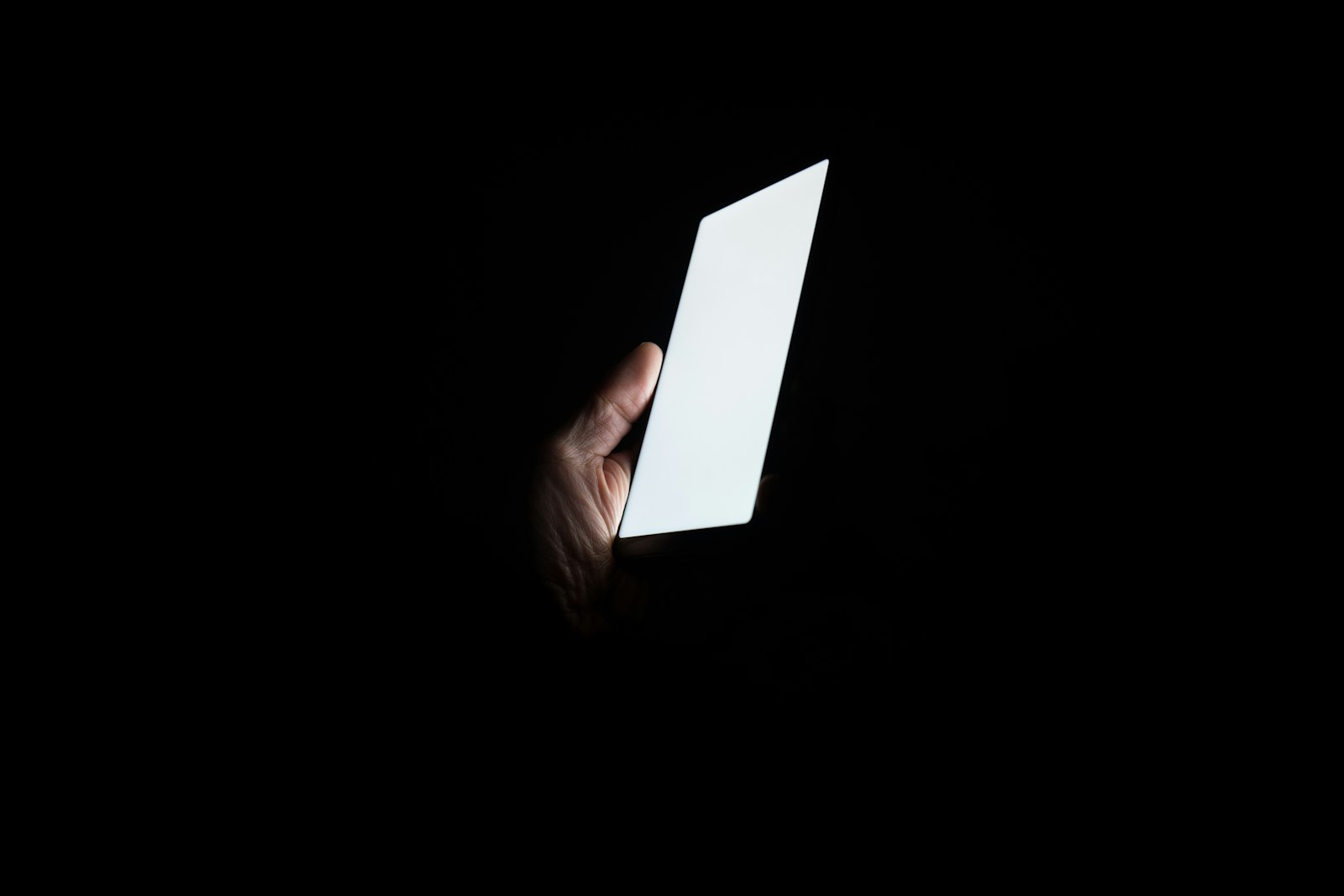
Everyone already knows the phone before bed is bad for you. If we know and still can't stop, it's probably because we've only been told half the story. The light is not the only culprit. There is a second one — and that one is probably tougher.
Culprit number one, light, shuts off the sleep signal
Start with the textbook version. Japan's Ministry of Health, Labour and Welfare's e-Health Net explains that melatonin, the hormone that promotes sleep, starts being secreted about two hours before bedtime, and that exposure to strong light at that point suppresses the secretion and affects how easily you fall asleep. A phone screen is a light source held close to the eyes, and as nighttime lighting goes, it sits on the too-bright side. That much is the famous part of the story — night mode and blue-light filters are debates that run along this same line.
Culprit number two is the content — it's too interesting
But even if you block out all the light, a problem remains. What's inside the phone is designed to make you want the next thing. Short videos autoplay the next one; social feeds show you something new with every refresh. Your head settles into spectator mode instead of sleep mode, "just one more" stacks up, and bedtime itself keeps sliding later. If light is a physiological problem — it stops melatonin — this one is a design problem: time melts by design. Night mode only works on culprit number one. Warming up the screen colors does nothing to stop the second — the two should be treated as separate problems, and that is the editorial team's conclusion here.
So the countermeasures come in two stages as well. Fight the light with dimness; fight the content with physics. The old advice — don't bring your phone into the bedroom — is still the strongest option, not because it's a lecture about willpower, but because cutting off access is the only measure that works on culprit number two. Don't fight design with willpower. Answer design with design.
For the restlessness that follows the cutoff, have a replacement ready. Paper books and magazines have no light problem, and no chapter autoplays the next one. Audio — radio, podcasts — makes an excellent nighttime companion because it needs no screen at all. Frame it as "quitting the phone" and you will fail. Frame it as deciding in advance what gets the last 30 minutes of your night, and it sticks.
One more thing: the light story doesn't end at night. The same e-Health Net article also notes that getting sunlight in the morning works in the direction of resetting the body clock. Rather than days spent resisting the nighttime phone, pairing that effort with a habit of opening the curtains in the morning makes the rhythm as a whole easier to rebuild.
Starting tonight, move the charger out of the bedroom
- Give the charger a fixed spot in the living room. Use something other than your phone as an alarm. Physical distance is what physically ends "just one more."
- Dim the room lights an hour before bed. Don't let brightness undo the body-temperature downhill you built in the bath.
- If you must bring it in, decide what you'll look at before you do. A screen with no purpose runs the longest. When the errand is done, set it face down.
If sleepless nights continue for weeks on end, that is a different matter from phone habits. Don't hesitate to consult a medical professional.